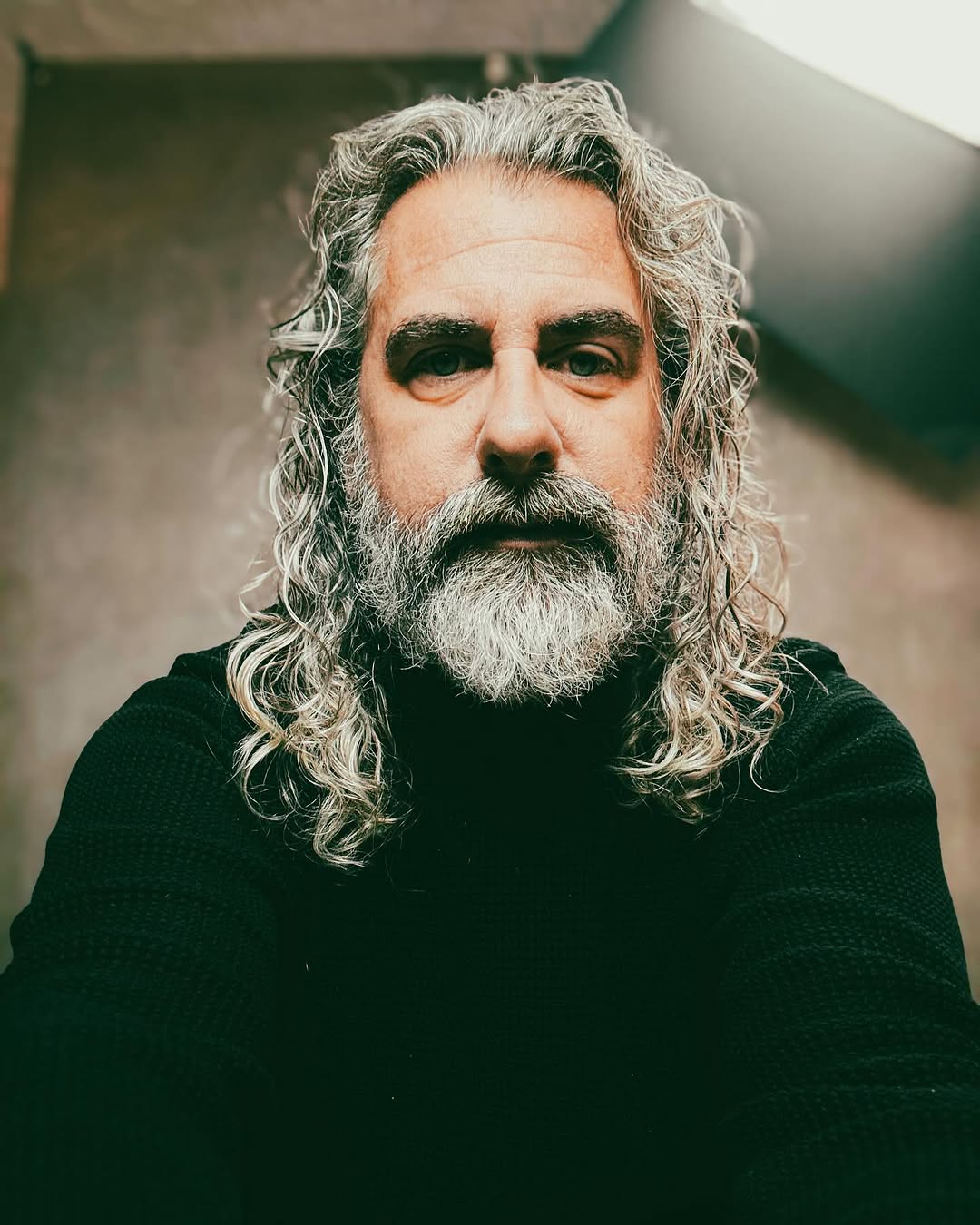
The last time I saw Douglas McCoy in person, we were in New Orleans—aka its own country (Douglas’ words, and honestly… accurate). This time, we linked up for an episode of The Digital Chair and immediately slipped back into that easy, “industry friend” rhythm—swapping travel stories, education hot takes, and the kind of behind-the-scenes salon reality you only hear when the cameras are rolling and the guard’s down.
We started where a lot of the best hair conversations start: vibes and stories. Douglas and I reminisced about Bayou Saint-Blond, the people, and that unforgettable last-night dinner in an old church—where the chef didn’t just feed us, she narrated the meal like a masterclass in culture and intention. Then, because New Orleans can’t help itself, it turned into an impromptu dance party with the service staff out front. You can’t script that. That’s the point. It set the tone for the whole chat: real life, real humans, real hair world.
The Education Shift We’ve All Been Waiting For
From there, we got into what Douglas is really passionate about right now: education that doesn’t rely on ego, shame, or intimidation.
He’d just finished teaching a two-day, hands-on razor cutting class in Toronto (with Back A Bottle at Civello Salon), and what stood out wasn’t just the technical focus—it was the way he teaches. Douglas isn’t there to perform a rehearsed show. He’s there to build confidence, skill, and curiosity without making anyone feel small.
He said something that should be printed on a banner and hung in every classroom: “Leave your ego at the door.” He wants stylists to stop trying to impress educators and start using education for what it’s actually for—growth. And he’s big on reading the room, finding who’s hungry to learn (not who’s “best”), and adjusting in real time so the class serves the humans in front of him.
And let’s talk tools—because we’ve all been there. Someone shows up with the “wrong” razor, or the distributor situation means half the room has something totally different than what the educator expected. Douglas’ approach? Make it work. Teach the why. Keep the dignity intact. He even brings extra razors so nobody gets boxed out. Because nothing says “gross old-school education” like: “You can’t use that… but you can buy the right one in the lobby for $250.” Douglas has zero patience for that.
His goal is simple: nobody leaves feeling wrecked. In his words, “I don’t want anyone walking out feeling shitty.” That’s it. That’s the bar. That’s the evolution.
No More “Break Them Down to Build Them Up”
We also got into the not-so-fun shared history many of us have in this industry—where education was basically a personality test designed to see who could survive public humiliation.
Douglas named it perfectly: the old philosophy of “break them down in order to build them up.” And he’s not interested in carrying that forward. He’s interested in building people up from where they are, and if someone’s frustrated, you don’t push harder—you rewind, simplify, and rebuild the foundation without crushing their confidence.
Honestly? That part of the conversation felt like exhaling. Because so many stylists are still healing from those “torture chamber” classes—and we should be past that by now.
Pony Studios, Editorial Energy, and Staying Sharp
Then Douglas took us to Oakland—specifically Pony Studios, which he describes as one of the best education experiences out there. It’s editorial-level talent, filmed with serious production quality, and accessible in-person or online (with live Q&A). And yes, apparently there’s a legendary dive bar next door, which feels like the most hair-industry detail possible.
But the real gem? Douglas got booked behind the chair at Pony for a day… and it lit something up. He loved the energy, the team, the high-level work—and he decided to start coming down every eight weeks to work for a week.
That’s such a pro move: if you’re in a smaller market or you feel yourself slipping into “comfortable autopilot,” you purposely put yourself in environments that demand more of you. Not because you’re not good—but because you want to stay sharp.
The Big Pivot: A Rebrand, A Reset, A Hybrid Future
And then we hit the business side—without it feeling like a business lecture.
Douglas shared that after 11+ years with House of Pop, it hit a point where it became too big to carry the way he wanted to carry it. Then came the pivot: with help from a friend, they shut down May 18 and reopened June 1 as Lucid Room—after gutting and rebuilding the entire space in about 10 days.
Now he manages the team and culture, while the business side is handled by his partner—freeing him up to create again, teach again, travel again, film again. And the salon model? Hybrid. Commission on one side, independent stylists on the other—so commission stylists can grow, build, and transition without leaving home base. That’s the kind of flexible structure I’m seeing more and more, and it solves a real retention problem: why lose talent just because their career goals evolve?
Also, Douglas wins for the most honest commission take: he prefers it partly because of taxes. Which, if you’ve ever tried to explain write-offs to a stylist who just wanted to learn a new layering pattern, you already know.