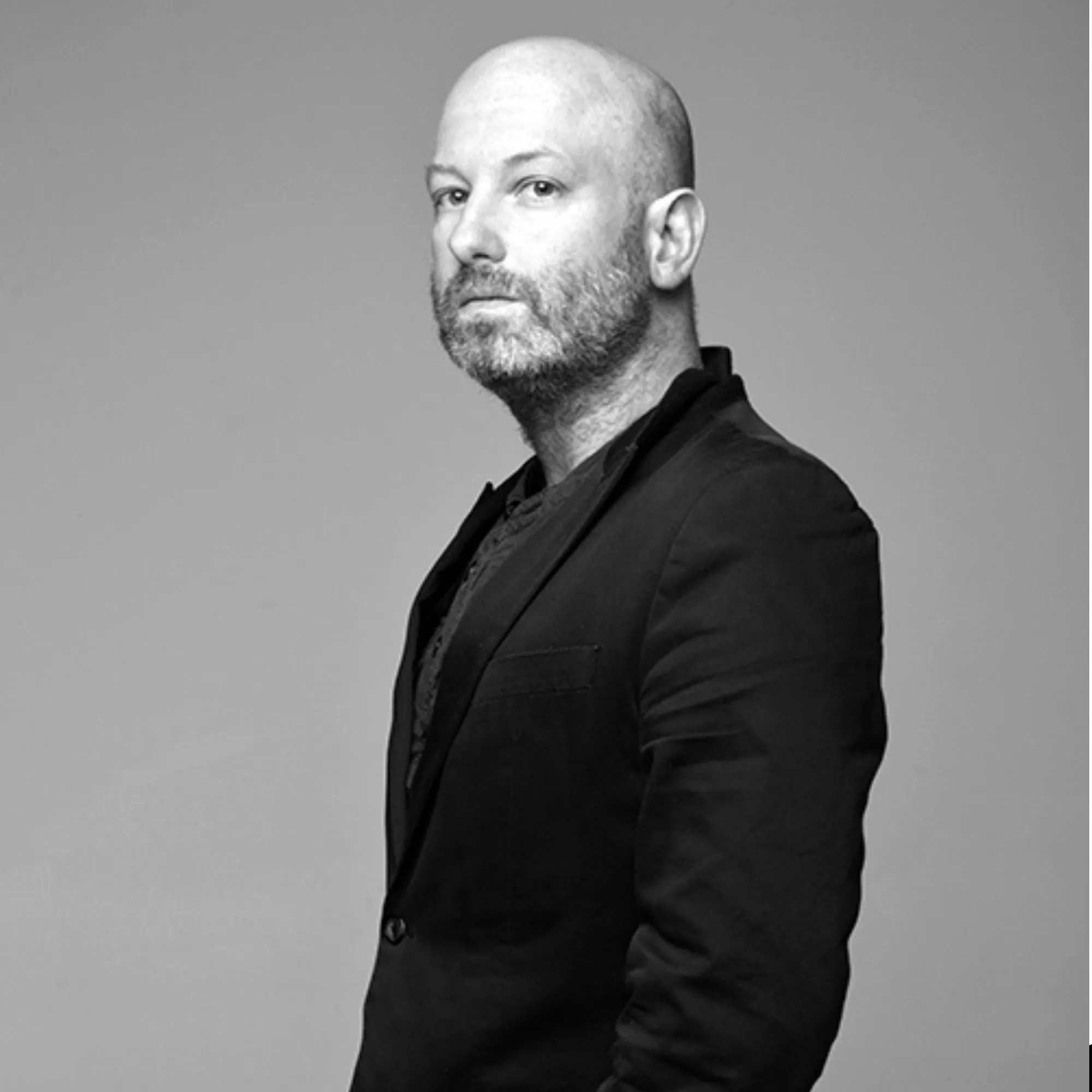
Every once in a while, an interview feels less like a formal conversation and more like getting pulled into the best corner of a hair show afterparty. My conversation with Charlie Price had that energy.
Charlie is a hairdresser from Denver, Colorado, and saying he has “done a lot” in the industry feels almost rude. He started in hair in the 80s through a vocational beauty program, built a serious foundation with Aveda, worked New York and Milan Fashion Week, traveled through Europe and South America with Revlon Professional, worked with Scruples, appeared on Bravo’s Shear Genius, created Beauty Underground, and still somehow makes it all sound casual.
At one point, after listing a career that could fill a full documentary, he basically wrapped it with, “That’s it. That’s my stuff.” Sure, Charlie. Just a tiny little résumé.
What I loved most about this conversation was how honestly Charlie talked about the industry. Not in a bitter way. More like someone who has seen every corner of it: the salon, the stage, the awards, the product companies, the photo shoots, the politics, the hotel bars, the fashion shows, and the parts that still make him want to create.
We talked about those early Aveda days, when education felt electric and the industry still had a little mystery to it. Charlie remembered meeting Horst in 1988, back when he would personally introduce himself to people at the Advanced Academy. There were fresh cookies, big personalities, and that feeling of being inside something that was growing fast.
We also got into competitions and awards, which Charlie has plenty of experience with. He was honest about how much awards helped his career, especially as an educator. Runway shows and awards became his calling cards. But he was just as honest about the side of competition that can start to feel formulaic, political, and exhausting.
That is one of the strongest threads in the interview: Charlie is not anti-success. He is anti-losing-yourself-chasing-it.
He talked about having to “deprogram” from parts of the industry that once felt important but eventually stopped feeling healthy or creative. That hit home. So much of hairdressing rewards constant proving. Prove you are relevant. Prove you are creative. Prove you are booked. Prove you belong. Charlie’s perspective feels like a permission slip to ask, “But do I even still want this version of success?”
These days, Charlie still does a small number of longtime clients, produces fashion work, shoots constantly, and submits to underground fashion magazines. And yes, he shoots on his iPhone and edits on his iPad. No giant camera rig. No overcomplicated setup. Just the work, the eye, and the patience to sit with an image.
I loved that.
There is something refreshing about a hairdresser with decades of high-level experience saying, essentially, “I stripped away the bullshit and now I just do what I like.”
We also talked about education, and Charlie had no problem calling out the current wave of gimmicky teaching. His point was simple: call a haircut whatever you want, but the basics are still the basics. Layering. Graduation. One length. That is the foundation. You can rename a shag, slap a trend label on it, or turn it into content, but the structure still has to make sense.
For stylists, that part of the conversation is worth watching on its own. Because Charlie is not saying education has to be boring or old-school. He is saying real education should actually teach something.
And for newer hairdressers, his advice was clear: get as much education as you can, be around as many different kinds of hairdressers as possible, and take advantage of the fun parts of the industry. Fashion shows, photo shoots, classes, creative projects, weird opportunities. Those are the things that can keep you connected to the craft long after the novelty wears off.
This interview has humor, honesty, a little industry side-eye, and a lot of hard-earned perspective. It is a conversation about hair, but also about longevity, creativity, reinvention, and knowing when to stop chasing the version of the industry that no longer fits.
Watch the full interview with Charlie Price for the stories, the laughs, and the kind of perspective you only get from someone who has truly been there, done it, and still wants to make something interesting.
You can find Charlie at:
Instagram: https://www.instagram.com/charliepricehair/?hl=en
Transcript:
Liam Shea (00:01)
All right, well, I am excited to be here chatting with you. Do you want to just do a really quick introduction of yourself or where you come from or, or, you know, what you started out as and we can go from there.
charlie (00:15)
Sure. Thank you for having me. I’m Charlie Price. I am a hairdresser from Denver, Colorado. ⁓ I’ve been doing hair since the 80s. I started ⁓ beauty school and high school, vocational program. And I don’t know, I’ve done everything. I’ve owned salons. I’ve worked for many, many manufacturers. I got my start at Aveda. ⁓ And…
Liam Shea (00:17)
Yeah.
charlie (00:40)
⁓ I was an educator. did everything with them I could do from having a concept salon to teaching at the advanced academies, doing New York fashion week with them, doing Milan fashion week. I worked with marketing ⁓ with Shane Wolf, who’s now the president on product development. I worked with Ray Shavello all over Canada. I did a ton of stuff with Aveda. And then after that, I worked with Revlon.
Liam Shea (00:54)
Yeah.
charlie (01:04)
professional went all over Europe and a little bit of South America. did stuff with Robert Lobeta there and David Rokuglia. That was an amazing gig I had for three or four years. I can’t remember. I worked with Scruples, small brand from Minneapolis, family owned. ⁓ They now are owned by Chi, but I worked with the family that started it and I got an amazing education on distribution and ⁓
Liam Shea (01:11)
Cool.
I know it.
charlie (01:31)
the manufacturing process right all in house, because they did everything. Their chemists were there in Minnesota, everything, marketing, the warehouse, everything was all right there, self-contained. So it was a great education on why I never wanted to start a product company. As much as I loved doing it, I also learned how things work with the big distribution mechanisms like ⁓
Liam Shea (01:48)
Yeah.
charlie (01:59)
salon-centric and what’s the other one? The one that owns Salik Cosmoprof. So I learned all about that stuff and all the politics and the deals and everything that goes on there that’s crazy. So I’ve had a very wide range of experience in the industry and I did New York Fashion Week for many years. I did it started in 98 after I went to Milan with Ted Gibson and my friend Brian Dupree.
Liam Shea (02:03)
Yep. Yep.
this crazy.
charlie (02:25)
Aveda sent us and then I just loved it. So I went on my own to New York. I worked with Guido, I worked with Serge Normand and I worked with Eugene Solomon that first season in Milan. So I did that. I was on a reality show in Bravo, Sheer Genius. ⁓ It ⁓ was great for me. ⁓ It was the best, most fun I’ve ever had. I did it right after I left Aveda and I wanted to reinvent myself like Madonna ⁓ and that.
Liam Shea (02:41)
I know the one, yeah.
Yeah.
charlie (02:54)
really helped get people outside of Aveda to know who I was and to care about what I was doing. ⁓ And I started a independent group, like a creative team called Beauty Underground. We did all fashion week through them and partnering with a bunch of brands loosely. And then we did things like the alternative hair show in London. did the international hairdressing awards in Spain, lots of fun stuff.
taught tons of classes together at all the shows independently. that’s it. That’s my stuff.
Liam Shea (03:26)
That’s it. that’s it. That’s all of it. man. What a small amount of stuff. ⁓
So where did you say you were? Where did you go to school again? Like what? What type of school? OK.
charlie (03:39)
I went to a vocational program in ⁓
Cherry Creek schools in Denver, Colorado, but ⁓ I think I got most of my key education, like my basics from people like Oscar Bond at Aveda. Everybody that I had at Aveda came from Sassoon, so I could go through all the names of the different people, but from Vivian McKinder, and she wasn’t necessarily from Aveda, but I…
Liam Shea (03:56)
Okay.
Yeah.
Yeah.
charlie (04:08)
became aware of her while I was at Aveda. so lots of Aveda people that were kind of post-Sassoon.
Liam Shea (04:16)
Yeah. Yeah. Sassoon or Sassoon was my start as far as it wasn’t at a Sassoon school, but that was the education I had from former Sassoon educators. And I loved that. I loved it. I still have four and a half inch years sitting in a pouch over there when I want to, when I want to torture myself with the world’s longest one length bob or something like that, which I still kind of adore in a certain way. Okay. So you started at vocational school and then you
charlie (04:37)
Right. Sure.
Liam Shea (04:45)
We’re at Aveda shortly after that. Those were early days for Aveda as far as hair goes. I mean, that’s…
charlie (04:49)
Yeah, I
started with my very first class when I met Horst was in 1988 at the Horst Institute. Back when he would come around and introduce himself personally to everybody at the Advanced Academy. They would send up, you know, fresh cookies from the restaurant they had downstairs and all of that was amazing. I loved those days at Aveda. They were spectacular. So much fun. I was so happy.
Liam Shea (04:56)
Okay.
Yeah.
It was such a cool time for that company. I mean, it’s always fun when you’re sort of there at the fast growth period of time where everything’s exciting and moving in a certain direction. That’s awesome. I can still smell my first step into an Aveda store. Like I can still, I still remember that. That was awesome. I loved that. ⁓ So how quickly, so you, so you’re at Aveda. At what point did you realize you liked ⁓
charlie (05:18)
Yeah.
Liam Shea (05:47)
either doing hair for fashion shows or editorial like how early on in your hair career did you realize you liked more than just being behind the chair
charlie (05:57)
Well, I always loved the salon environment because my parents both had very pretty hair and I had pretty hair for five minutes when I was a teenager and we liked going to the salon. I loved everything. I loved the smell, like you said. I loved the books that the I was really intrigued by the books full of hairstyles and I always wanted to. Yeah, the passion book ⁓ or whatever.
Liam Shea (06:13)
Mmm.
The big ones?
I loved that
so much. Yeah.
charlie (06:21)
That’s how I heard of
people like Loretta and stuff and Tony and Guy was from those books before I even started hair. And so when I went to beauty school, always knew I wanted to do, I started taking pictures of hairstyles right when I started beauty school when I was 17. And so I always knew that I wanted to be part of the creative piece of hairdressing, but I liked just being in the salon. So.
Liam Shea (06:37)
Yeah.
Yeah. I loved early days in salon environments. mean, obviously, I’m sure we’ll all have the same stories, which is there were large aspects of incredibly torturous periods of time with horrifying people and having to say yes to every client to begin with and all that stuff that happens at the beginning. ⁓ when you so what was the first fashion show you did? Was it a local thing or was it?
charlie (07:01)
Yeah.
Mm-hmm.
⁓ hmm.
I don’t know what the first one was. I, when I, when I was assisting in Denver here, I worked with a guy who became one of my main mentors. ⁓ it was a Latino guy and a black guy, a black guy, James I’m still friends with. He’s like my family. We he’s, ⁓ he’s worked for me. I’ve worked for him. We still do photo shoots together regularly. ⁓ and he taught me how to do every texture of hair that there is and all of that. And we all did, ⁓
fashion show in Aspen in the 80s, the three of us, plus the salon and everything. ⁓ I actually was doing makeup that day, because there was only one person doing makeup, and I loved doing makeup too. So we did it for foray. So I got to do hair with foray in 88 in Aspen. so from then on, we just, that was it. I loved it. I was hooked. And I did lots of local shows with.
Liam Shea (07:49)
Yeah.
Okay, yeah.
Awesome.
charlie (08:07)
with them when I worked at that salon and I kept doing it when we got our really nice mall that finally came to Denver. And so I’ve done a lot of shows with ⁓ the department stores here working with great designers. And then of course in New York assisting for all the fancy hairdressers, the big names. Yeah.
Liam Shea (08:23)
Yeah, that must have been incredible,
incredible. ⁓ So were you competing right away, like early in your career as well, was that later?
charlie (08:34)
No, I
always thought that was kind of like cheesy. I was really very judgy on any kind of competition because I just thought it was tacky. ⁓
Liam Shea (08:43)
Yeah. Well, I mean,
it’s to a degree it is. mean, there’s incredible skill. I struggled with the same thing. Yeah.
charlie (08:49)
But there is skill. I mean, there’s so much skill to it. Yes. And it’s so specific. It’s
so specific. the hair Olympics and all that, I always thought that was like, no, that’s not what I want. want like, I’m interested in Italian vogue. You know what I mean? I don’t really care about like that. But then I got hooked into, ⁓ went out of VEDA. was ⁓ taught a lot by band council and ⁓ he was teaching all of the educators at the time, among other people.
Liam Shea (09:04)
Yes.
charlie (09:18)
but he really was into ⁓ the Naha Awards. So he’s really, when he won hairstylist of the year in like 92 or something, I was like, I’m gonna do that. I’m gonna enter Naha. so it took me, and then of course I got kind of obsessed with it, cause I can get competitive. I was never into sports, but I was into bowling and speed skating and I was competitive. like, I just got in there, but I never could get into Naha until, I mean like,
Liam Shea (09:23)
Yeah.
Okay.
charlie (09:48)
get through, pierced through that until 2002. So it took me 10 years of entering. And I was going to New York and hiring New York models and I was hiring all different kinds of photographers. I just think that it took me a while to figure out the formula. It’s highly formulaic and highly political. don’t care what it… I used to be on the committee for Naha and I’m not saying that this makes it corrupt, but it’s highly political.
Liam Shea (09:54)
Yeah.
Yes. Yes.
charlie (10:16)
It is absolutely who you work for. and it’s a popularity contest and it started to make me crazy. I be, was so linked to that for a long time that I had to kind of deprogram myself from that, just like I did from a beta. Like you get, once you go so far down the rabbit hole with these like little corners of the industry, I really had to kind of extricate myself from that for my, I hate to use the word mental health because it’s such a cliche, but I’m like, I got to get out of this. This is not.
Liam Shea (10:19)
Yes.
But
charlie (10:46)
I’m not happy anymore because of this stupid contest. You know?
Liam Shea (10:47)
yeah. Yeah. Yeah. No, I mean, I had to, I mean, I was sort of apprenticing for the whole salon that I was at. What? It was a 12 chair salon with 13 stylists here in Vancouver in Canada. ⁓ And so I was sent to apprentice competitions. And I think I got a bad taste in my mouth for two reasons. One was, like you said,
because it was formulaic, I struggled with it and it wasn’t the look I was interested in. I was interested in runway and editorial work and that’s not what it is exactly. you know, it was always the same kind of blow dry and the same kind of color. I also wasn’t that great at it and I don’t think I love doing things I’m not immediately good at. So I think it took a while to really start to appreciate.
charlie (11:29)
Right. Not at all.
Liam Shea (11:45)
how incredibly skilled you have to be to produce that type of work, even if it is formulaic. Producing that type of formula is complex and requires a skill set. I apprenticed under one person who was definitely a big, a gentleman named Anthony Crossfield, and he was definitely a big competition hairstylist and represented Canada at the, I don’t know, can’t remember if it was the Olympics or just the World Hair Awards at the time, but.
charlie (11:55)
Yeah.
Uh-huh. Uh-huh.
Liam Shea (12:11)
⁓ and he was the one who got me into it. I’m really glad I competed, but I found the same thing which was…
I came in third like two or three times and I kept getting beat by people who weren’t following the rules, but they knew…
charlie (12:26)
That’s
crazy when that happens, yeah.
Liam Shea (12:29)
It was like no fashion colors. And then the person who won had fire engine red. like, don’t under, like I would have done, if I’d known I could not do three levels of warm blonde, I absolutely would have done that. And then it was who you know, one year I didn’t do well because it turns out my model had previously dated one of the judges and he even apologized later that he.
charlie (12:33)
Yeah.
Yeah.
Mmm. ⁓
Liam Shea (12:55)
shouldn’t have let the fact that she stole his jacket or some weird story. So yes, I found it like that, but
I still, I still.
got fast because of it. Like I learned how to cut quickly. I learned how to do things quickly. So I definitely appreciate that. ⁓ I mean, you’ve won a truckload of awards.
charlie (13:09)
Mm-hmm.
I got really into the award thing for a while. used to, it felt good. And like I said, you get into the competition and it also used to have so much meaning, you know, it used to really help you. And I was an educator. So it really helped me, um, along with the, doing the runway shows. Those were my two calling cards, awards and runway shows. But you know, now there’s just too many awards. Nobody can keep track and social media.
Liam Shea (13:28)
Yes. Yes.
charlie (13:44)
It’s very hard to get traction on anything. So, you know, people pay attention to an award for like five seconds. And if you win an award, I think the people who are doing awards now, at least not so much Europe, but I would say here in the U S and Canada specifically, is people who are trying to hang on to their corporate jobs that don’t do celebrities and that don’t do editorial because it gives them some kind of status.
Liam Shea (14:07)
right.
charlie (14:14)
⁓ And that used to be what I always used to think that that’s what I wanted to do like be a creative director for a company But I’m like no, I think it’s like a trap I’m so glad I never did it. I mean, I’m still a little have fantasies of that You know what I mean? But I’m like, ⁓ I see these people and I’m like if they’re happy fantastic But I just see like they’re on a hamster wheel to me is what it looks like Trying to claw into relevancy, you know
Liam Shea (14:40)
Yeah.
Yeah, that’s bananas. Yeah, and social media really did. I feel like there was a huge like before social media, there was no way for the general public to know who hairstylists were. So so being able to like list those awards, even if they don’t even know what the award is, you’ve written awards. There’s only three of them or four of them, maybe five. ⁓ Yeah. of course.
charlie (14:42)
So.
Exactly.
Yep. Yep.
Also, clients, my clients loved it. My clients loved when I won awards. They
loved that. it was good. All of that stuff was good for clientele too. Saying, I did this fashion show in New York. I did this. I got this award. They love that. So it would, I don’t know if it really matters anymore because people have the attention span of gnats. And also I think that with competitions, whether it’s the ones you were talking about, like the hair Olympics or what I, the Naha.
Liam Shea (15:13)
Yeah.
Yeah, they get to tell their friends. ⁓
Yeah.
charlie (15:32)
It seems like the only people who really care about it now are the people who are in it. And that’s just, to me, I’m like, this is getting so sad. And I always call it like the award whore people. I don’t know if this exists ⁓ in the Olympic world, but it’s like these people that exist only to win awards. And like you look at their page and that’s all there is. There’s nothing else, but look at how I’m getting this adulation for these awards. And to me, I was like, okay, that’s another reason I’m like, I gotta go, cause I don’t wanna be that.
Liam Shea (15:37)
Yes. Yes.
Yeah. Yes. Well, I would. What’s that saying? My dad used to always use it. It might have been Groucho Marx. Something like I would never want to be part of a club that would have me as a member. It’s just that like, no. it’s a group. There’s a name. No, no. I’m unique. I’m not in any way, or form, but I want it to be. ⁓ Would you if you.
charlie (16:12)
Yeah, sure, exactly.
Liam Shea (16:29)
I mean, it sounds like you loved the journey early on, but would you tell yourself right before you started doing hair to do anything differently, or what would you tell yourself if you were getting in now? What advice would you give yourself if you were starting now?
charlie (16:44)
No, I don’t regret anything. totally enjoyed it just until I didn’t. So I wouldn’t say do the only thing I sometimes I go back and forth in my head of I got a job at Frederick for Chi, but I couldn’t. It was crazy because they didn’t understand I lived in Denver and they said you have to be here tomorrow morning to start. So I couldn’t accept that job. And then I got a job at Sassoon on Fifth Avenue. But I thought this salon was beat up and kind of ugly. And I just didn’t like it. And I thought.
I’m making great money in Denver. I’ve got my own salon. I don’t know that I really want to do this and I just didn’t go. So sometimes I wonder what would have happened had I gone to Sassoon, had I gone to Frederick Frikay, what would my career have been like? But I did everything I wanted to do without moving to New York. So that would be my only thing I might do differently. And what I would tell myself or anyone else is,
When you come out of beauty school, just get as much education as you can and be around as many different types of hairdressers that you can and take advantage of all of the variety of things we can do as hairdressers that are stimulating and fun because that’ll keep you in the industry for a long time. If you don’t hook into anything, I think those are the people that become nurses and flight attendants, which is fine too. If that’s what want to do, cool. I mean, of course we need nurses. There’s a nursing shortage, ⁓ but I mean.
Liam Shea (17:50)
Yeah.
Yes. Of course.
Yes. please.
charlie (18:05)
Like whatever,
Liam Shea (18:05)
Yeah.
charlie (18:05)
you know, but if you want to stay in it, think take advantage of the fun stuff.
Liam Shea (18:10)
Yes. Well, and we don’t need any more people doing it that don’t like it and complaining about it endlessly. Well, it’s not. It’s like so few people actually have financial success in this industry. You can have great financial success. They don’t usually mention in hair school, like, you know, they’ll be like somebody that’s charging $1,500 a haircut. You’ll probably be making $22,000 a year, but we’re not, we’re not going to bring that up. that.
charlie (18:14)
please, yeah, I mean like if you don’t like this job, just go. I mean, it should be fun.
Right. That’s one thing. What you’re
saying is one thing I loved about Aveda is that the hairdressers were rich. Like they were driving Mercedes and had Cartier watches and wearing all Prada. It was like the cliche that we talked about of the Aveda educator all in black with a Cartier watch. And I know other companies are like that, not just Aveda, but that’s just where I was. But I liked, I think there’s a lot of, I mean, it is only 20 % of people make 80 % of the money.
Liam Shea (18:43)
Yes.
Totally.
charlie (19:06)
But at the same time, it’s not really that hard to be one of those. It’s just that a lot of people don’t want to, don’t, for whatever reason, they just don’t want to commit to getting that to that level.
Liam Shea (19:17)
I think you also have a, I think you have a bunch of people who finish high school or in my case don’t finish high school.
have no idea what they want to do, know that they either can’t get into college or don’t want to go to college or can’t afford college and think, I’ll go into hair because it’s easy. It’s like, my God, it’s not, it’s easy to go to, get into hair school. It’s not easy to do. It’s not even that it’s not easy to do hair. It’s not easy to let go of that high school mentality that it’s somebody else’s fault that you’re not doing well. And, I think so many people end up like you’re saying as nurses
charlie (19:33)
Mm-hmm.
Yeah.
Right.
Right.
Liam Shea (19:56)
and
flight attendants and it doesn’t really matter to the industry end up in a job where they can just go to work and then leave work and they don’t their level of effort doesn’t affect how busy the job is or their level of interest ⁓ I think it just whether you’re going to be a commission stylist for your life a chair renter rent in a booth doing stuff you have to love it and push yourself I mean no one’s going to do it for you
charlie (20:01)
Yep.
100%.
Yep, and you have to hook into the industry enough to be one of the people that can charge more. Because I think that’s the big problem why a lot of people think they can’t make money as hairdressers because they’re just not getting the credentials and getting the education and the knowledge to just make a little bit more money or a lot more money as the case may be.
Liam Shea (20:26)
Yeah.
Yeah.
And even some of the people that do just don’t charge more. Like they’ll do it and they’ll, I hear it all the time. well, you know, I mean, they’re my friend. I really don’t want to, I’m like, no, I have lots of friends that come. They won’t even let me give them discounts because they’re my friend. ⁓
charlie (20:43)
Right. That’s crazy.
Right. Yeah. Right. Yeah,
that’s a yeah, that’s bad when you don’t charge enough this night. That doesn’t work.
Liam Shea (21:01)
Yeah, you don’t have to overcharge, you can. mean, you can, but, it isn’t over. If somebody’s paying it, it’s not overcharging as far as I’m concerned. ⁓ I mean, it sounds, it sounds so awesome getting to start a debate when you got to start because.
charlie (21:08)
Right.
Liam Shea (21:21)
education, not just trying to find the right education, but there’s a limited amount and there certainly was at that point a limited amount of education for educators like teaching you to be an educator. There’s even today, there’s a ridiculous amount of information and courses out there you can take, there’s still a limited amount of ⁓ actual
charlie (21:32)
Yes.
Liam Shea (21:44)
structured education to teach you to be an educator. Usually if you do, you end up just being lucky enough to be mentored or around people that do it and you pick it up. But there isn’t usually like a system for here’s how you educate. ⁓ Did they?
charlie (21:57)
Yeah, I think the
problem, I think the problem now with the, you know, train the trainer is back then it was very specific what we were basically being trained to sell products, ⁓ and educate hairdressers on running their salons or whatever it was, if you’re a business educator. But now it’s like, I think everybody’s so scattered with their, with their ideas. Everybody wants to be an influencer now and they think influencers are the educators and they can be if.
Liam Shea (22:07)
Yes, that’s true.
Sure.
charlie (22:27)
They can be educators if they’re very focused on something like for a while. Remember there was like a whole plethora of updo people that were doing like the ugly country, Western, like fluff, I don’t know, hideous updo’s and then making a ton of money and doing great and getting a billion, a bazillion sponsorships and whatever. So I think that has staying power and that’s a type of education. But yes, what you’re saying, the type of education that we received from
Liam Shea (22:36)
Yes.
Yes.
charlie (22:56)
Aveda or I would say Tony and Guy used to do it. Redken absolutely did it. ⁓ I don’t know. I’m probably, don’t know who else I can think of. Paul Mitchell, of course. Those kinds of education programs for educators. Yeah, it’s, it’s, they still exist, but they just don’t get as much attention because I think, like I said, there’s just too many things going on for people to pay attention to.
Liam Shea (23:19)
Yeah, well, and it’s easy. mean, it’s not easy to be successful as an independent educator, but it’s easy to become an independent educator. build a website and you’re an independent educator. Yes, because everyone’s allowed to be one. Yeah.
charlie (23:30)
There’s just lots of shitty educators now. Lots of shitty educators. So people
who actually know how to teach and public speak and do things have an edge. ⁓ But the thing with Aveda now that’s different, like when I was there, there was no core team really. Like there wasn’t an artistic team. So it was great because there was a lot of opportunities for everybody. It wasn’t the same five people doing every collection.
Liam Shea (23:52)
Right.
charlie (24:00)
And now it’s, it’s different now. So even that’s different at that, at that manufacturer, ⁓ which is more of a traditional way that it is. That’s how it is at Tony and Guy and other places. But that was one of the magical things about Oveda is that there was a lot of opportunities for people to kind of come in, dip in and dip out. Like if you didn’t do, if you did this collection, you probably wouldn’t do the next one, but you’ll do one another time. And the Congress festival was so great because there was a lot of people involved. would say Redken is like that.
Liam Shea (24:00)
Right.
Right.
charlie (24:30)
They never changed it. There’s lots of people that can do great stuff because there’s a huge sort of loose team or whatever. Not like a core team that does everything. Yeah.
Liam Shea (24:30)
Okay.
everybody so everybody kind of gets the chance to be a creative director
for a hot minute if they want to
charlie (24:44)
And it’s more fun for the audience too, because like when I went to the Congress festival, it was always like, my God, who am going to see? It’s going to be this person or that person. Whereas I would go to the Tony and Guy one in Dallas, but it was always the same 10 people on stage. So I stopped going because I got tired of that. But at Aveda, I was like, and I know Redken is the same way. I don’t know if Paul Mitchell, think Paul Mitchell might be similar to that too. I have never been to one of theirs, but they are, there’s like, is, who am I going to see this time? It’s going to be different people, you know.
Liam Shea (24:50)
Right.
Sure.
They are, that’s who, yes, that’s who we
got. ⁓ We didn’t get Tony and Guy in Vancouver, but the Paul Mitchell team came through and it was the same people every time. Now, I mean, you could, it did mean you couldn’t learn stuff, but it…
looked the same every time. It was like iterative changes year in and year out, but you could, without the team there, I could point out which the Paul Mitchell looks were. Like that’s the Paul Mitchell looks because they look like, and there’s nothing wrong with it, but you’re right, it doesn’t have that, I wonder what it’s going to be. Like I don’t know what it’s going to look like.
charlie (25:24)
Yeah.
Right.
Yeah.
And I know like Aveda will bring in, I just saw there, I still pay attention to every, I try to pay attention to all these things as much as I can, but Aveda brings in a lot of cool people still that have nothing to do with Aveda, like people from France or people from some, whatever country, Japan or something. But it used to be fun to see what Aveda people from different places were doing. Like I learned about people in all the different kingdoms of Aveda or whatever. That was super fun. So.
Liam Shea (25:58)
Yeah.
Yeah.
Yeah.
charlie (26:11)
I do miss that. Congress Festival was something so special when Horst was running it. I loved it back then. It fun. It was always in Minnesota and Minneapolis. Yeah.
Liam Shea (26:17)
Where did the- where was that?
Okay, it was okay.
Awesome. Yeah. I love those types of shows. And I love learning. I mean, it’s when you bring people in, especially from other countries, especially if they’re doing something different. I feel kind of like.
charlie (26:25)
Just a big fun convention.
Liam Shea (26:37)
And again, it’s not inherently negative, but because of social media, because of sort of the globalization of pop culture, things have started to look the same everywhere. It used to be, I remember my first trip to Italy. It was just a trip to Italy, and I’m sure it’s the same for you going to Milan Fashion Week. I went there.
charlie (26:48)
Yes.
Liam Shea (26:55)
and it was different. had never, the fashion there didn’t exist here. We might have pieces of it, but I’d never seen those looks before, and they existed there. And then when I went over to Paris on that same trip, it was different looks. It didn’t look the same as the looks over in Italy. Now I find, you know, they’re not the same, but they’re globalized, the looks.

charlie (27:00)
Right.
Right. Yes,
I agree.
Liam Shea (27:22)
But I’ve loved
talking to any hair nerds in Lucid Room about their Japan trips and learning about the service style that exists over there and the way guests get treated. I love learning about completely different ways of going about it. And it feels like there’s a little less of that now. It’s not, mean, again.
charlie (27:41)
Yeah.
Liam Shea (27:45)
we’ve also democratized education to a degree in that it’s so much easier to get access to it without traveling but ⁓ absolutely
charlie (27:51)
Yeah, and that’s, that would be the good thing about social media. When I was with Revlon, I’ve talked about Aveda so much, I gotta talk about something else or people are think I’m obsessed with Aveda, my God. But when I was at Revlon, that’s what I, I loved that part. What you’re talking about is seeing the way European, ⁓
or Japanese or South American people run their salons and it’s very different from, think Canada is more like Europe and we are just our own weird animal in the U S I don’t know. So for me that was very exotic to see all the year hang out with all the European salon owners. And ⁓ I guess it’s just so much more respected. There’s it’s like a, there’s just such a thing like, like just the, a Baker or a
Liam Shea (28:26)
Yeah.
charlie (28:35)
⁓ Taylor or a restaurateur or the salon is like, there’s still people are very proud of their jobs in Europe and then there’s a value. Whereas here it’s like you have to either be a stockbroker or a rapper or a ⁓ pro athlete or else we don’t care about you.
Liam Shea (28:52)
yeah.
Well, we’ve started to create importance in jobs that have no importance. Like finance is one of the best jobs you can have. Can somebody tell me what part of finance benefits society? that’s. Yeah, like if you all disappeared today, the problem would be what? Like what? What gap would exist? We’d all be less poor. Like, ⁓ that would suck. ⁓ yeah.
charlie (29:01)
Right, or an influencer.
Nothing. And they have no product.
Totally. Totally. Totally.
Liam Shea (29:26)
Yeah, it’s interesting because when you go over to Europe, you have a much, and the UK as well, you have a much stronger sort of caste system of like the importance of things. But built into that, you have this level of importance in each of them. You know, like a chef is, you know, here you were a cook.
charlie (29:34)
Yes.
Liam Shea (29:45)
There you were a chef. That’s not the case now, but like at the time it was like you just cook. wasn’t trades weren’t important, but over there, you know, you’re a hairdresser in Milan. my God, you must be some form of a God or something to have pulled that off. ⁓ And maybe it’s just their culture appreciates things that we didn’t in the same way over here. I don’t know. Yeah. Yeah. So, okay. So you’ve, you know, you, you, did.
charlie (29:59)
Right?
Liam Shea (30:14)
platform work but in particular you did fashion shows you liked working behind the chair ⁓ did was editorial work in there early on or what did that come later for you
charlie (30:25)
Editorial has always been such a hard one to chase because it’s such a club that you have to be brought into even more so than fashion shows. worked with, ⁓ I created things to give myself opportunities for editorial. So whether that’s working with a magazine that I helped launch here in Denver ⁓ or trying to get myself published when I was in places, trying to get something.
in a magazine when I was at New York Fashion Week working with someone in New York to get things up. It was just kind of woven all the way through editorial. I just got it where I could get it and I was always trying to scavenge for those printed pieces, which I’m still obsessed with the printed magazines. I’m involved in trying to get stuff now into all these underground magazines. That’s what I love. That’s my thing. ⁓ Underground magazines.
Liam Shea (31:00)
Yeah.
Sure.
really? I would love to…
we don’t have to delve into it too far but my co-friend or Stephen and I both ⁓ love magazines and zines and have been talking about like is it time to start doing a physically printed zine again? Like nobody needs another Instagram account but it’s… yes for sure but there is like
charlie (31:33)
Right, yes.
Because it’s analog and analog is the hot word. Analog.
Liam Shea (31:44)
There’s so few, whereas I’m gonna start a new Instagram channel. Okay, cool. Good luck. Yeah. Yeah. ⁓
charlie (31:48)
Right, yeah, nobody cares, yeah. Yeah. So editorial has
always been like a rarefied thing and I’ve collected all my magazines that I’ve been in over the years and I’ve got to try to get, I’ve got them somewhat contained so I’m not a hoarder in my house or anything. It’s all neat and tidy, but it’s not really organized the way I want it to be. So that’s one of my jobs in my retirement that I’m going to do is get my archive in order.
Liam Shea (32:15)
Yeah, I love it. Become an archivist. I always loved the sounds of that. ⁓ And then, so, I mean, you say you’re retired to a degree or partially retired. What does that mean to you? I have no doubt you take pictures like crazy and you still do stuff and you’re still…
charlie (32:17)
Yeah.
Yeah, I do photo shoots all the time
because I have to do something creative. It makes me feel like I’m not completely gone from the industry, but it also makes me be able to scratch a creative itch that I have to do, whether it’s art or whether it’s whatever. I have fashion. It keeps me involved in all the things I love. I still produce a fashion show in Denver every year. It’s this big children’s diabetes thing and they bring designers from New York. this year it’s Zhang Toi.
who’s this guy that I’ve followed for many, many, many years. And he’s, I wouldn’t call him an A-list designer, but he’s solid in New York forever. So that’s really fun getting to do that once a year. And occasionally I’ll do another fashion show for ⁓ this boutique that’s been in town. And last year I got to do one of the CFDA winners that came, ⁓ who’s now doing Parenza Schooler, cause they’re doing LaWavy in Spain. So these weird things come through town.
Liam Shea (33:01)
cool.
charlie (33:29)
just like they have since the very beginning of my career. I still do very few clients, but they’re just like my 80 year old clients that I’ve had since the 80s, 1980s. I can’t abandon them. I love them and they love me. So we just, I still do their hair, but it’s like, I don’t know, three or four people a week, maybe. And some weeks I just don’t have anybody because they don’t, there’s just not enough clients. so it’s not even.
Liam Shea (33:38)
for sure.
No. No.
charlie (33:56)
It’s not, I’m retired pretty, I mean, I don’t do hair behind the chair barely at all. It’s in my house. I have a salon in my house and it’s fun. But basically I just do photo shoots and I love it. That’s what I’m the most excited about, what I’ve always been the most excited about anyway. So it’s like I’ve stripped away all the bullshit and I can just do what I like. And I don’t have to worry about getting an award for it. I don’t have to worry about that or worrying about if I’m gonna get it.
in American salon or modern salon or whatever salon magazine in Canada or whatever. I’ve kind of even stopped sending my stuff to salon magazines because except for a couple in Europe that publish so much all the time, nobody cares because I’m not attached to a brand. They’ve always been advertorial anyway. So if you’re not attached to a product company, they don’t really have space for you.
Liam Shea (34:46)
Yeah.
charlie (34:48)
So I gave up on that.
Liam Shea (34:51)
and what kind of stuff for you photographic and what kind of
charlie (34:55)
It’s really based on fashion. I mean, it’s less hair.
I’d still do the hair for it. And hair is, of course, an important component, but I would say it’s more like, they’re more like fashion pictures. The clothing leads the whole thing.
Liam Shea (35:06)
Yeah.
Where can people find that? Is that just on your?
charlie (35:12)
It’s all, I post
almost every day on my Instagram, TikTok. I don’t post every day on TikTok. I post like twice a month on TikTok. I post on Facebook and Instagram almost every day. And I really like getting them published in these weirdo magazines that are around that maybe nobody cares about, but the people that are in the magazines, I don’t know, but they’re fun. There’s a whole microcosm of underground magazines out there and it’s been fun to.
Liam Shea (35:23)
awesome.
awesome.
charlie (35:40)
interface with those people out there that are interesting. some people from the hair industry have spilled over into it too. I’ve seen some London hairdressers and some people from Canada and some people from Australia that show up in these magazines that I submit to every once in a while. And that’s cool, that’s fun.
Liam Shea (35:58)
That’s fun. I’m gonna bug you later on about I want a list. I want to know what some of those are. See if I’ve heard of any of them. Delve into them. That’s a fun world. Are they online, Zines? Do any of them print physically?
charlie (36:02)
Yeah, sure. Yeah.
Yeah. Well,
it’s weird because some of them, I would say the vast majority are digital magazines and they have print on demand. So whoever wants one can order one. Some of them don’t have ads in them. Some of them do have really good ads. There’s one out of Paris that has really nice ads. I don’t know. ⁓ And then there’s a few that I’ve found that are print. There’s one Canadian one.
called, they have two, it’s High Volt and Emirage, and they’re on newsstands. They’re based out of Toronto. There’s a couple in Montreal. There’s one called Flannel out of Montreal that I think is really good. There’s one out of LA called Basic that I love, and they’re on newsstands. So it’s been a learning curve for me to try to find those and find out which ones are decent and which ones are bullshit. Because sometimes you have to pay to be in it, sometimes you have to pay to submit, sometimes you have to pay for a cover.
But it’s less money than I was paying on one Naha shoot. So, who cares?
Liam Shea (37:08)
Yeah. Yeah, I know. Some
of that stuff costs so much to be involved in.
charlie (37:14)
Yeah, we were flying
John Ross and out from like, you know, from London and Richard Monsieur from Monsieur Richard Monsieur from Amsterdam. And I’m like, I can’t afford this shit. I just can’t afford this anymore. It’s like too, way too much money. And I love them. They were so much fun. We had a great time. It was absolutely so much fun. But I’m like, babe, I can’t do this anymore. I don’t work for any companies. We’re self funding all this.
Liam Shea (37:25)
Yeah.
Well, and so… Sure.
Mm-hmm. Who’s this for now now that it costs as much money to do it. This is for who? Yeah, I love that. What do you what do you shoot on mostly? Yeah
charlie (37:43)
Yeah. Right.
My iPhone. I
do everything on my iPhone and I edit all my pictures on my ⁓ iPad. And it’s been, that is so much fun for me to sit down for hours and edit a photo. I went on a really weird pilgrimage. I don’t know if pilgrimage is the right word. I just got really immersed in like AI and having fun with all my old pictures and fucking around with them with AI just to get, to figure out what it is, you know? What could I do?
Liam Shea (37:59)
Okay, what do you
Yep.
charlie (38:21)
And they’re basically
Liam Shea (38:21)
Yeah.
charlie (38:21)
animation. So that’s more of like an illustration or art. So now I’ve gotten completely the other way and I retouch everything by hand on my iPad.
Liam Shea (38:31)
Okay,
what are you using to edit on the iPad?
charlie (38:35)
I have like five different apps that I use for filters, but for just basic Photoshop, I use Facetune. And I’ve tried Adobe Photoshop and all the fancy ones. And I don’t think I, for my needs, I can do exactly what I need with Facetune because I’m not gonna be putting this on, printing it in a, ⁓ you know, ⁓
Liam Shea (38:44)
Okay.
charlie (39:04)
billboard somewhere, it’s not going to be at a sports complex on some giant screen or something. It doesn’t need to be that eight bazillion megapixels or whatever. They’re high res enough. They’re high res because they print beautifully. And I did an art show with them and printed things that were like four feet by three feet and they look beautiful off my phone. And I’ve gotten better since then.
Liam Shea (39:10)
Exactly.
yet
Right.
It does crack me up.
It does crack me up when people are using like $8,000 photo cameras with infinity megapixels and then posting it on Instagram. You’re like, I don’t understand. Like go for it.
charlie (39:37)
Yeah. I don’t want, yeah, you can’t even tell. And I can’t,
you know what? I don’t want to carry it around. I don’t want to pay for that equipment. I don’t want to learn how to use all that equipment. I don’t have the attention span. I’m too old for it. I’m like, I don’t have time. Like I don’t have time in my life. I’m going to be dead in 20 years. can’t. If I live to be the normal age, then I’m like, I don’t have time for all that.
Liam Shea (39:52)
Yeah.
Yeah.
Yeah. Let’s get on with it. Wrap it up, folks. I love it. ⁓ Do you did you stay you’re in Denver? Yes. Is that what you said? Did you stay living in Denver the whole time? Awesome. Yeah.
charlie (40:05)
Yeah. Yep.
Yeah, I felt like I lived in New York for a while because
I was there so much, but I never did actually live there. Yeah, it was really fun. mean, teaching at the Aveda Academy there, doing Fashion Week, we would go into the Redken Exchange and practice when we were using Redken products for Fashion Week or Nicaragua. We would collaborate with him, Sassoon. I would rent places for us to do our tests for.
Liam Shea (40:24)
I kind of love that though.
charlie (40:45)
Fashion Week, so I was just there constantly. ⁓ And then I was in Canada for a lot. I was going to Canada a lot when I was working with Ray Shavello up there teaching there. Like I said, I had that stint where I was going to Europe a lot. But really as an independent educator doing that hair show circuit in the US is what made me, I was like, this sucks. ⁓
Liam Shea (40:55)
Yeah.
charlie (41:11)
I hate being in convention centers. hate sitting in the middle row in a coach seat because nobody will pay for anything. I’m not making any money. This is just lame. I gotta stop this cycle because I mean, nobody has to convince me to drink. I love to drink, but I’m like, all I’m doing is getting shit faced in the bars at these cheap hotels with people that I know. And then I’m to go to the next town and get drunk with the same friends. And I’m like, this is just lame. Not right.
Liam Shea (41:36)
Yeah. No, that shouldn’t be the primary activity. Like it’s fine
if it is a thing that goes along with, but it shouldn’t be the primary thing happening to me.
charlie (41:46)
And I saw
a lot of other people doing it too and I’m not judging anybody because people should do whatever they want. But I’m like, this is just not fun. I’m like, if it’s fun, then go wild. I wasn’t even, it’s like, this is, I’m just bored. Mostly is what it is, bored.
Liam Shea (42:00)
Yep.
Yes. I felt exactly the same way in the party days where it was like, actually, I don’t want to I want to go home. I’m good. No, I want to go. I want to do a routine and then be creative in my little like organized box. All right. So you’re taking pictures now. So people will find it on your Instagram. What’s your Instagram handle? Love it. Okay. That’s going to be ⁓
charlie (42:03)
So yeah, yeah, yeah. Get back in the routine.
Highly priced hair.
Liam Shea (42:29)
gonna have to do a little deep dive into the zines and check out all the places I can find, find that work that is rad. And ⁓ do you have anything coming up in Denver that you’re doing or working on that folks who happen to be in Denver? What’s the show called? Yeah. What’s the show in Denver called that you’re doing?
charlie (42:42)
Just that fashion, that designer’s coming from New York. And I’m always like, I’m always doing shoots, you know, so.
it’s the Children’s Diabetes Fashion Show happens every year. It’s like a thousand rich ladies, a thousand rich ladies having lunch. Yep. Yeah. I get paid to do it. So I’m like, I can’t take credit for any charity. I’m being, I’m a contractor.
Liam Shea (42:55)
Okay, that’s his name. Yep, fantastic. Well, that’s what you need. If you have to raise money for something, that is the correct route to raise money for something.
Yeah, but I mean that’s great. It’s so funny that if you do like the professional hair shows, it’s the opposite of getting paid. And if you go do a charity, you get paid.
charlie (43:18)
Yeah, I get paid way better for this show in Denver
for the charity show than I ever did. Now, I will say that Revlon and Aveda paid me really well, but like when I was just doing independent, no, I had to generate the money myself.
Liam Shea (43:30)
Yeah.
Yeah. Are there any hair shows that you still every couple of years try and make your way to?
charlie (43:40)
⁓ you know what? I had a big health thing like a year ago. had a little over a year ago. had, ⁓ deep vein thrombosis. It turns out I have a gene in my whatever. had blood clot. So I haven’t been to any hair shows, but I, ⁓ I want to go to some, but I don’t know what it’s going to be. You know, I was doing right up until the end, we were going to do this thing for, ⁓ haute coiffure francais in France. I was going to, I was the U S it was sort of like a
Liam Shea (43:49)
God.
charlie (44:09)
a poor man’s intercoeur fear, if you will, really small. And that’s why I liked it. Cause it was, I would could deal directly with the people who were running it. But because of my, my, my health thing, I’m not doing that anymore. So I don’t know, you know, honestly, it’s still the same people that I saw over, you know, I, there was some new people that I was at the Paris one, like the Paris, Tony and guy team, or just random people from countries that had their teams for that organization. That was fun. But,
Liam Shea (44:17)
Yeah.
Okay.
charlie (44:38)
No, I’m probably not going to go to any hair shows. I’ll just be honest. I’m probably not. I’m probably not going to. I mean, never say never.
Liam Shea (44:41)
Yeah, that’s fine.
I went to
New Orleans, was it February last year? I think it was February last year to the Left Brain Group’s Bayou Saint-Blond, which is really little. Like I think it was, there was maybe 150 attendees over three days.
all in New Orleans. So it was a tiny little thing. There was only two stages, a main stage and a secondary stage, and they were never on at the same time. So everybody got to see everything. I really enjoyed that. It was also the first time I’d been to a hair show where I felt like I was just surrounded by my peers and it wasn’t 80 % buying a discount flat iron and 20 % there to learn something. ⁓ So that was fun. Not that I don’t like
charlie (45:19)
Yeah.
Right. Right.
Liam Shea (45:31)
buying discount tools, like not that I have.
charlie (45:32)
Yeah, the flea market can
be fun. It’s just, it’s just, you don’t want to be immersed in that forever.
Liam Shea (45:37)
No, I find I need like 90 minutes. So I was at, ⁓ IBS the year before and I’d never been to, to it before. And in Canada, we just have access to less stuff, right? We have access to like most of the same brands are here, but you’ll get the first set of stock and whatever’s less will make its way up here. So like, you know, why am I forgetting the Korean comb brand? Ys park. ⁓
charlie (45:56)
Mm-hmm.
Mm-hmm.
Liam Shea (46:06)
We get it, but there’ll only be three of them and, there’ll be empty trays. But, if
charlie (46:09)
Right. Yeah.
Liam Shea (46:12)
I go to IBS, everything’s there and I get to buy it. So I enjoyed that aspect a lot. And then, ⁓ yeah, it was a lot of like coaching though. Now a lot of it’s just about coaches, different coaches, people coaching, coaching.
charlie (46:14)
Right.
Yeah. But at least
we’re, at least we’re not in the, ⁓ we’re not in the, ⁓ life coach, Yogi influencer thing anymore. I’m so glad that’s over. That drove me crazy. I was like, I thought I hated the, ⁓ unicorn rainbow thing, but then I was like, my God, I’d rather have that than this, this, like, they’re not even doing hair. It’s like now they’re doing yoga and they’re life coaches. So.
Liam Shea (46:33)
No.
No.
Please, please let’s go back. Yeah.
Yeah.
charlie (46:54)
I mean, like, and now I posted a little bitchy thing about this, but I’m like, listen, as much as I am bored by the new influencers just doing standard hair in the salon, at least it’s hair, you know? So at least there’s something real there instead of the BS that like, we’ve gone back to the basics, which is fine. I’m like, I’m on board.
Liam Shea (47:06)
Yeah, I’ll still watch. I’ll still watch.
Yes. I will
actually watch process all day long. Like if it’s not just skipping to the end, if I get to see pros, I love process. But yeah.
charlie (47:21)
Yeah. Right. Well, it’s also fun to judge. They’re like, ⁓
that cape is so dirty. Look at their station is filthy. Totally fun to judge.
Liam Shea (47:31)
Yes, for sure. Oh my gosh. Yeah.
One of the people I apprenticed under Anthony, um, he’s like six foot four, six foot five. And so he was the first person to teach me how to clean on top of things. He’s like, there’s a certain amount of people that can see on top of things. And most people here don’t know the top of the mirror is disgusting. Um, uh, yeah. Or when somebody does like a video where they’re, you know, they’re at the hair sink. Did you not clean the trap in the hair sink before your video?
charlie (47:51)
That’s hilarious.
Just, mean…
Liam Shea (48:01)
Like, first of all, it shouldn’t
even be about the video. You should clean the hair out of the trap in the sink.
charlie (48:05)
They only care about
their fingernails though. They’re like, but look at my nails. Tap, tap, tap, tap, tap,
Liam Shea (48:14)
my gosh, I love it. Brutal. ⁓ Okay, so I think last question I’m going to ask is, ⁓ is there anything being taught right now that drives you up the wall that you feel like, I don’t wanna say is misinformation or straight up wrong, but just feels like. ⁓
That’s not the right place to be teaching new hairdressers. That’s not the right thing to be teaching new hairdressers. If you don’t, it’s fine, but…
charlie (48:43)
think it’s the same,
what I would call it is misinformation to disinformation, which is clickbait that is just like everything in culture, whether it’s news or politics or whatever, or a celebrity is dead that’s not dead just to get you to click on it. I think there’s so much disinformation in hair education now that people are more concerned with the name of something that if it’s actually accurate.
So I’m fine with changing names of haircuts or whatever, but I mean, that’s okay as long as it makes sense and they’re still like, okay, this is the, I don’t know, the laser cut or whatever. Because companies have always done that, but it’s basically a shag. Because the basics are the basics and you can’t change that. There’s layering, there’s graduation, there’s one length, and that’s what we’ve got to work with.
Liam Shea (49:17)
I was just about to ask you about that.
Yes.
charlie (49:41)
So you can call it whatever you want. like, just, you know, like we’ve gone back, like everybody’s getting so gimmicky that I think that’s what drives me crazy where they’ve like, they’ll twist the hair and do this really weird like ceremony. And it’s like, well, that’s just nothing. You just did nothing there. And calling that education, I think that’s what drives me crazy.
Liam Shea (49:44)
Sure.
charlie (50:07)
But I also think it’s good for the real educators because once somebody finds the real educators, they’re going to learn so much more. And the misinformation is generally just people’s ego. They just want ego and attention. They don’t really want to ⁓ teach anybody. They just want to look at themselves, play with their own hair. know? ⁓ my god, you guys, I just wanted to jump on here. Yeah, you jump on every five minutes to look at yourself.
Liam Shea (50:13)
and they’ll be able to see the difference right away.
Yeah. Yeah.
Yeah. Yeah, it’s
also in your calendar. You didn’t want to jump on. You scheduled it.
charlie (50:37)
I just wanted to jump on here
really fast, really quick.
Liam Shea (50:42)
That for me, the haircut naming thing, it was when the wolf cut came where I was like, but we’ve been doing the shag for the last five years again. Is that, that’s a shag, right? Like, I just need you to tell me what the thing is that’s different. Am I, am I not seeing it or did you just rename the same haircut?
charlie (50:55)
Alright.
think
what also happened with that specifically, not the wolf cut, but these naming and stuff, is all of the big companies hired people that are not hairdressers to do their social media, and you can tell. I can just see it’s like a 20-year-old female that wants to do whatever’s on Refinery 29 or whatever, and that’s what they’re gonna focus on, and it’s not about hairdressers anymore at all. It’s not about that.
Liam Shea (51:10)
Right. Yes.
Yeah.
charlie (51:26)
It’s not about anything making sense. It’s about trying to get traction in the vacuum. And that’s it.
Liam Shea (51:31)
You can’t do your January top five new haircuts of the year if it’s the same haircuts from last year, even though it’ll still be the same haircuts from last year. Absolutely, course it is. Of course it is. You haven’t invented a new haircut. You altered a haircut.
charlie (51:36)
Right. Which they are, you know.
It doesn’t change that fast.
I love the Pantone color of the year. was like, this could not be more of a Saturday Night Live skit. The white, I’m like, I love white, so that’s cool. And then everybody’s like, my God, how are we gonna do this? How are we gonna bleach all the hair? And I said, just buy white wigs. I commented once, I’m like, I have to comment. Just stock up on white wigs, you’ll make more money and you don’t have nearly the brain damage.
Liam Shea (51:49)
yes. ⁓
Yes.
my god. You were right though because you said product companies have been doing it for years. It’s not like it’s a new concept. I remembered when I started noticing companies coming up with a product and I was like, I don’t understand. Is that not… You’re foiling, right? Like, you just used a word I’ve never heard before but it looks like you’re weaving hair and putting it in a foil. Why does it have a different name?
charlie (52:09)
Charge them for the whitewigs.
Yeah.
Yeah, foilage. They did the foilage
and everything.
Liam Shea (52:35)
Yes, it’s still a foil. Like it’s a rooted foil,
but it’s a foil. I do it, but it’s, but it, but it’s still all right. Yeah. Fine. you and me both. You and me both.
charlie (52:43)
I’m so glad that highlights are back though and foils. please. When it
was like, not, I’m like, I’m not doing balayage. I don’t do it. Goodbye.
Liam Shea (52:51)
I never
actually did hand painting. Mostly because I found my clientele had a dark base. Like was a lot of level four fives and they kept saying, I want ashy. I’m like, cool. I hope you like orange to red because these are the colors you’re gonna have. ⁓
charlie (53:01)
Yeah.
Right. You can’t get that from the S, right? Exactly. Exactly.
Liam Shea (53:12)
It seems like it’s really red. I’m like, don’t know what to tell you. Your hair’s black. I I don’t know. I know you saw that one video of that one person one time that made white blonde in the air. I swear to God they must have had 400 humidifiers and had that place at like 105 degrees to get it to do that. But whatever. That’s fine.
charlie (53:15)
Yeah.
Right.
Totally.
Liam Shea (53:32)
it’s been a total pleasure this is fun i’d i wouldn’t mind doing an entire our at some point just talking crap we could come up with just a specific list of all the things were we could do it like quarterly what to talk crap about this quarter and then you can turn it into a zine article of some some sort for your personal seo purposes or whatever ⁓ okay so i think i asked about instagram where else can people find you i think you have a website
charlie (53:34)
Likewise.
Yes, fine.
Yes.
Right.
Yeah, Charlie Price hair, but that’s it’s a lot of old stuff on there. I don’t update it very often. Charlie price hair.com and I’m on Facebook. I still do Facebook. I don’t care what anybody says. Charlie Price and I’m on Tik Tok as Charlie Price 69 year I was born, not the sexual position the year I was born.
Liam Shea (54:15)
Nice. ⁓
I bel- that- that’s just fine. Either way, I would have been fine with it. But yes, I figured it- I figured that. ⁓ well, it’s been a total pleasure. Thanks so much for taking the time. I hope, the rest of your day is fantastic. You’re welcome. Thank you.
charlie (54:28)
Yeah, likewise.
Likewise, thank you. See ya.
Bye.